
Chick With A Chainsaw: She Goes Where The Storm Calls
COFFEEVILLE — When the call came, Lori Gorospe didn’t stop to look up Coffeeville, Mississippi on a map.
She packed her chainsaws, hooked up her tiny camper and headed across the country.
“I go where people call me to go to help,” she explains.
Gorospe, who lives in Colorado, has spent weeks clearing storm damage in Yalobusha County, working property by property, limb by limb.
A former military service member, she has been responding to disasters since 2014. What began with chainsaw teams and wildland fire training gradually became something more — a calling that now takes her wherever communities need help as her non-profit ministry was birthed: Chick With A Chainsaw.“I’ve always felt led to serve,” Gorospe explained.
When she arrived at the Multi—Purpose Building in Coffeeville, which served as ground zero during the storm recovery, she started the way many disaster volunteers do — with whoever showed up each morning willing to work.
One of the first to step forward was Kevin Robertson, along with a few other helpers tackling heavily damaged properties in the early days. She spent time teaching Kevin proper chainsaw safety and cutting techniques, and he quickly became a steady presence on job sites.
“He can work,” she said. “He stuck with it.”
Kevin’s brother, Braxton, joined the effort as well, helping move debris and clear yards. Their father, Vince Robertson, brought equipment, including a trailer, and often ran his own saw alongside the crews.
Before long, organized volunteer teams began arriving through connections made by Rev. Jim Peterman, pastor of Coffeeville Methodist Church.
Peterman put out a call through the Global Methodist Church disaster response network. Crews responded from the South Carolina Conference, the Alabama Emerald Coast Conference and the Mississippi-West Tennessee Conference.
“They’re trained. They’re credentialed,” Petermann said. “They know what they’re doing.”
For Gorospe, the arrival of those teams was a huge boost.
“What had taken me two days to complete by myself, we were knocking out 11 jobs a day,” she said.
Together, the volunteers completed approximately 128 homes, working through a lengthy list before the disaster crews returned home this week as the list slimmed.
The work has ranged from clearing driveways and cutting leaning trees to removing limbs that buried propane tanks and blocked access to homes. On some properties, trees lay tangled across each other under heavy pressure, requiring careful cuts to avoid injury.
“I’m not an arborist,” Gorospe said. “When you’ve got tree on tree and widow-makers overhead, you have to be careful. I learned a lot from these crews.”
The visiting teams brought not only skill but spirit.
After one long day, Peterman said the volunteers gathered around tables and shared stories of where they had seen faith at work.
“They went around and talked about where they saw Jesus that day,” he said. “Everybody had a different story.”
Gorospe said that spiritual component matters as much as the saw work.
“Sometimes people don’t need their yard cleared first,” she said. “They need to know they’re seen. They need to know someone cares.”
To organize requests, Gorospe and the teams have used a national platform called Crisis Cleanup. The app allows the addresses to be entered and volunteer groups to claim and complete jobs.
“All across the United States, you can see open operations,” she said. “You claim the job, you go do it, and you close it out.”
She travels in a self-contained camper so she can remain on site without burdening local resources. Much of the work is funded through small donations. Operating a mobile disaster response ministry requires more than chainsaws and good intentions. Fuel, replacement chains and bars, safety chaps, helmets, ladders and routine equipment maintenance are ongoing expenses. She travels thousands of miles between deployments, and donations to Chick With A Chainsaw help sustain those practical needs, allowing her to respond quickly when the next community calls.
Gorospe has worked disaster zones in Texas and North Carolina during the last year. She said each storm leaves different scars.
“Everybody shows up for the immediate emergency,” she said. “But rebuilding takes years.”
In Yalobusha County, she has been especially mindful of elderly residents and families without the means to clear heavy debris on their own.
“It always seems like the ones who get hit the hardest are the ones who can least afford it,” she said.
Gorospe expects to remain in the area several more days before moving on to assist other communities impacted by the same storm system.
She knows she will likely see many of the same volunteers again somewhere down the road, especially the ones who are have the deepest commitment.
“The ones who keep pushing long after the press coverage has subsided are the ones I am talking about.”
When asked what keeps her going, she paused only briefly.
“There’s a song that asks, ‘Did I do all I could do in the time You gave me?’” she said. “When I get to heaven, I want God to say I did.”

Lori Gorospe stays in a small camper while working disasters. The wall and ceiling is lined with pictures of people she has encountered at previous disasters.

Lori Gorospe commended Kevin Robertson’s work ethic. Kevin has worked alongside of Gorospe during much of her work in the county.
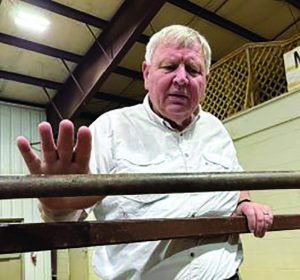
Coffeeville Methodist Church pastor Jim Peterman put out a call for help from multiple Global Methodist conferences.
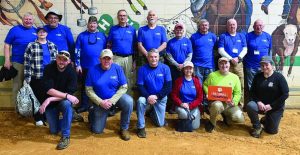
Rev. Jim Peterman (top left) and Lori Gorospe (bottom right) pose with volunteers from the South Carolina who helped clean up downed trees in countless yards across the county.
