Living Well 10/23/25
PROTECTED CONTENT
If you’re a current subscriber, log in below. If you would like to subscribe, please click the subscribe tab above.
Username and Password Help
Please enter your email and we will send you a password reset link.

October FCS After 5 – Sourdough Bread Class
We had a great Sourdough bread class Thursday night. Participants received starter, samples and recipes of bread, cinnamon rolls, caramel pecan rolls and dinner rolls.
I love to hear from program participants about their experience once they get home. I heard from several of the participants that they had a busy weekend baking the different bread recipes for their families. Way to go ladies!!!
4-H Modeling club meeting – Our modeling club practices are coming along nicely as we prepare for our upcoming Modeling show. We will have our next meeting on Monday, October 27th at 5 p.m. at the Extension office located in the Multi-Purpose Building in Coffeeville. For more information you can contact me at the Extension office 662.675.2730 or [email protected]
4-H Monthly Cooking Kits – The October cooking kits will be distributed on Thursday, October 23rd. Please pickup all kits by Friday, October 24th. Evaluations and pictures should be submitted to me by October 31st.
The 4-H Home School Club will have their next meeting on Monday, November 3rd at 1:30 p.m. at the Extension Office. We are celebrating fall so bring a game and snack to share.
The Looped with Love Crochet MHV will meet on Thursday, November 6th at 10 a.m. at the Extension office.
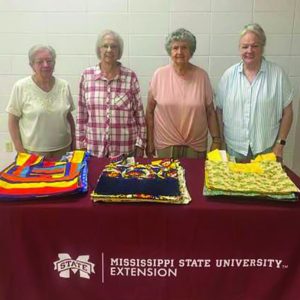
Sewing for Service MHV will meet on Monday, November 3rd at 9 a.m. at the Extension office.
Healthy You Exercise Classes
Join us every Wednesday at 9 a.m. at the Extension office for a Chair Exercise Program. We will be using Curtis Adams workout program which is designed to help seniors develop strength and enhance the ability to function in daily life. Great opportunity to get up to 50 minutes of physical activity. Wear comfortable clothes and bring water to drink.
Join us every Friday at 9 a.m. at the Extension office for Indoor Walking Program. We will be using doing a 30 minute indoor walking video which is designed to help individuals build cardio and balance to enhance the ability to function in daily life. Great opportunity to get 30 minutes of physical activity. Wear cool comfortable clothes, good walking shoes and bring water to drink.
The Walk Mississippi and Live Healthy…One Step at a Time program has officially started!! This program encourages all Mississippians to adopt healthier lifestyle habits through physical activity and nutrition education. This no-cost, six-week program runs from October 11 through November 21st.
Walk Mississippi Highlights:
Goal: Participants walk 180 miles (the width of Mississippi) over 6 weeks. All types of exercise count such as biking, swimming, gardening, dancing, etc.
Support: Weekly emails featuring video presentation links and educational materials from our Walk-a-Weigh program.
Flexibility: All types of physical activity count. An online activity calculator will convert non-walking exercises (like tennis, swimming, etc.) into miles.
Tracking: Participants log daily activity through a provided survey link.
Audience: Open to all Mississippians—individuals, families, co-workers, church groups, and more.
Registration is still open. You can find more information and register at: http://msuext.ms/walkms
ServSafe Manager’s Certification Course will be offered on Thursday, December 11th from 7:30 a.m. until 6 p.m. at the Extension office in Coffeeville. The deadline to register and pay fee is Friday, November 14th. The fee is $150 and will include the 7th edition revised book, study material, an 8 hour class and exam. Payment can be made at the Extension office in Coffeeville via cashier’s check or money order or you can register online at https://www.fsnhp.msstate.edu/workshops/servsafe/reistration.php All books will be shipped via USPS.
ServSafe Manager’s Certification will be offered on Thursday, November 13th. There are two times available 10 a.m. and 2 p.m. The cost is $114 this includes a book, online exam and proctor fee. Study is on your own. Payment can be made at the Extension office in Coffeeville via cashier’s check or money order or you can register online at https://www.fsnhp.msstate.edu/workshops/servsafe/reistration.php All books will be shipped via USPS.
Mississippi State University is an equal opportunity institution. Discrimination is prohibited in university employment, programs, or activities based on race, color, ethnicity, sex, pregnancy, religion, national origin, disability, age, sexual orientation, genetic information, status as a U.S. veteran, or any other status to the extent protected by applicable law. Questions about equal opportunity programs or compliance should be directed to the Office of Civil Rights Compliance, 231 Famous Maroon Band Street, P.O. 6044, Mississippi State, MS 39762.
High Blood sugar at a young age may raise risk for ardivasular complicatioans.
Adult-onset diabetes used to be an “adult’ disease. However, as overweight and obesity are more common in adolescents, more are being diagnosed with this chronic condition at a younger age.
A recent study indicates that chronically elevated blood sugar and insulin resistance in this population significantly raise the risk of worsening structural and functional heart damage between the teenage years and young adulthood.
The study was done as a collaboration between the Baylor College of Medicine in the US, the University of Bem in Switzerland, Murdoch Children’s Research Institute in Australia, the Universities of Bristol and Exeter in the UK, and the University of Eastern Finland. The results were published in the highly esteemed Diabetes Care.
In this new study, 1600 adolescents were monitored from age 17-24 years. To evaluate the prevalence of prediabetes (elevated fasting blood sugar levels), two cutpoints were used: a strict cutpoint of greater than or equal to 5.6 mmol/L recommended by the American Diabetes Association, and greater than or equal to 6.1 mmol/L, which is the current recommendation in several countries.
When combined, 6.2% of 17-year adolescents had fasting blood sugar of greater than or equal to 5.6 mmol/L which increased almost fivefold to 26.9% by 24 years of age. Only 1.1% adolescents had a level of greater than or equal to 6.1 mmol/L, but the prevalence increased fivefold to 5.6% by the age of 24.
Excessive heart enlargement (known as left ventricular hypertrophy) increased threefold from 2.4% at age 17 to 7.1% at age 24, and heart dysfunction went from 9.2% to 15.8% in young adulthood.
Chronically elevated fasting blood glucose levels of greater than or equal to 5.6 mmol/L from age 17-24 were linked with a 46% higher risk of left ventricular hypertrophy. This risk was threefold if fasting sugar was consistently greater than or equal to 6.1 mmol/L.
Elevated blood sugar also reduced heart muscle relaxation, changed normal heart function, and significantly raised the pressure of blood flow returning to the heart. Chronic insulin resistance was linked with a 10% higher risk of premature and worsening heart damage. Within the 7-year growth period, increased blood sugar levels added a 0.57 g/m to cardiac mass increase in females compared to a 0.11g/m increase in males.
Past research in adults has shown the elevated blood sugar levels and insulin resistance at a young age greatly predict the risk of type 2 diabetes in individuals in their mid-fifties. In addition, it’s known that when a younger person is diagnosed with type 2 diabetes, more and severe complications may follow quickly.
Agbaje, physician and associate professor of Clinical Epidemiology and Child Health at the University of Eastern Finland noted, “Earlier results from the same cohort indicate that late adolescence is a critical period in the evolution of cardiometabolic diseases. The current findings further confirm that even healthy-looking adolescents and young adults who are mostly normal weight may be on a path towards cardiovascular diseases, if they have high blood glucose and insulin resistance. Surprisingly, we observed that high blood sugar may aggressively damage females’ hearts five times faster than males’; therefore, special attention should be paid to girls in terms of prevention.”
Diabetes prevention in young adults is key. Getting Type 2 diabetes at a younger age often leads to more complications and health risks sooner.
Below are tips to protect them:
Be a role model. Avoid sugar-sweetened beverages, sports drinks, soda, tea and energy drinks.
Encourage physical activity as part of a healthy lifestyle. If kids want to play on sports teams that is great, but if not, it can be easy to find other ways to keep them moving like riding bikes, skating, skateboarding, walking pets, swimming etc.
Don’t reward kids with food This may create a negative relationship with food and overeating.
Choose whole grains, which have been shown to reduce the risk of diabetes.
Encourage lean protein sources such as fish, poultry, and low-fat dairy products.
Serve vegetables at most meals to encourage a plant-forward diet.
Limit red meat and processed red meat, which have been associated with a higher risk of diabetes, heart disease, and other chronic conditions.
Include low fat dairy products such as yogurt, which may help prevent diabetes.
Add beans or lentils to their diet for added fiber and a meatless meal option.
Discourage the intake of fast food and convenience food.
Article source: foodandhealth.communications